
Industrial Security Systems in Ontario: 7 Areas Manufacturing Facilities Should Review
Industrial Security Review: A practical security plan for Ontario manufacturing facilities should connect cameras, access control, intrusion alarms, TRA, compliance, video analytics, AI-supported monitoring, and system integration.
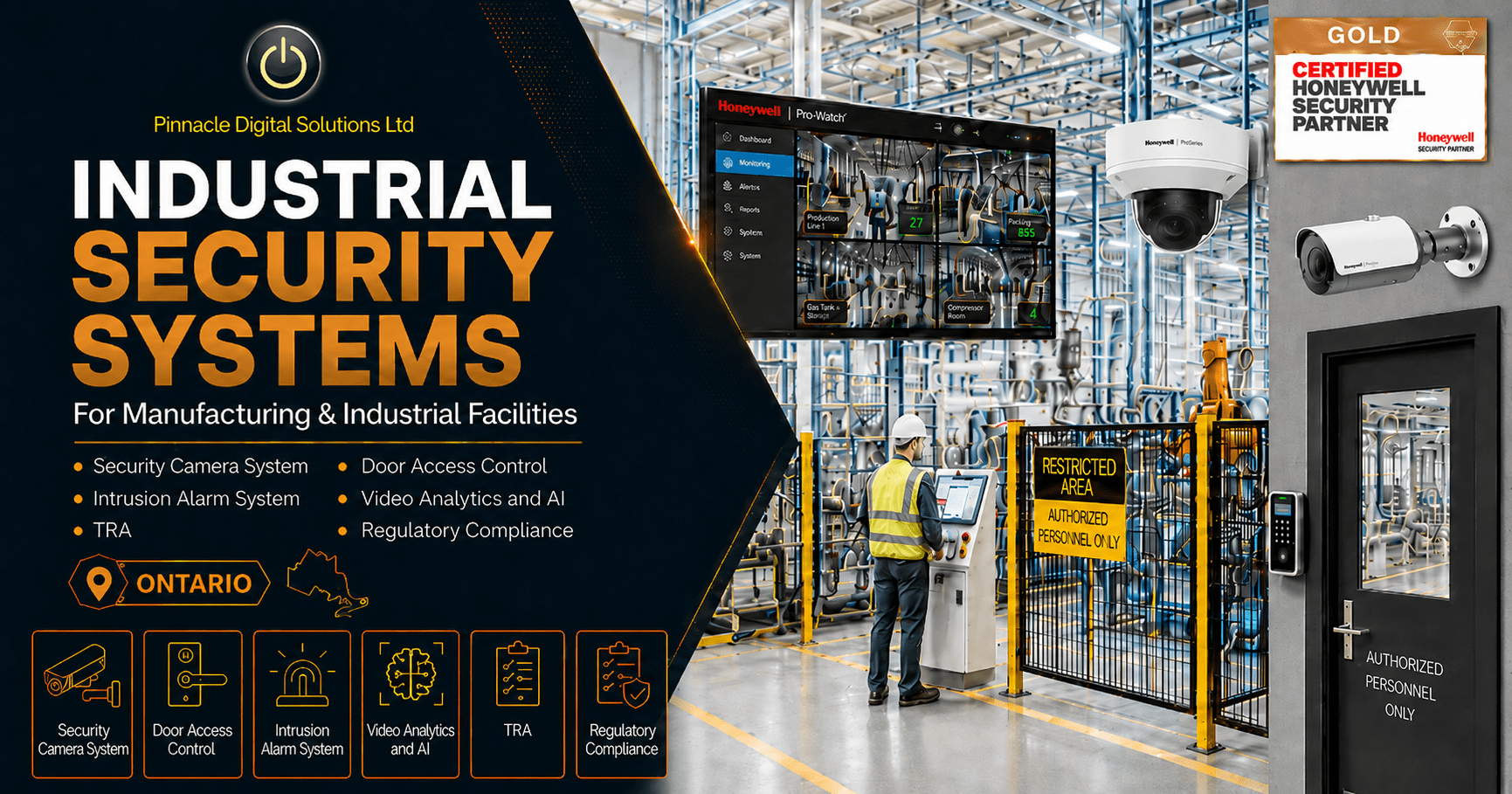
Technology credit: Pinnacle Digital Solutions works with trusted commercial security technologies, including Honeywell Security Systems, for video surveillance, access control, intrusion detection, video management, and integrated security operations.
Manufacturing facilities are busy, high-movement environments. People are moving between departments, trucks are entering and leaving, materials are being stored, machines are running, contractors may be on site, and different teams may work across multiple shifts.
Because of that, industrial security cannot focus only on the front entrance.
For many Ontario manufacturing and industrial facilities, the real security gaps are often found around loading docks, staff entrances, side doors, outdoor storage areas, restricted rooms, parking lots, equipment spaces, and after-hours access points.
A strong industrial security system should help your facility team see what is happening, control who can enter, detect unauthorized activity, and respond quickly when something looks wrong.
That is why many manufacturing facilities review their security camera system, Threat Risk Assessment, regulatory compliance, door access control, intrusion alarm system, video analytics, AI-supported monitoring, and system integration together instead of treating them as separate items.
Pinnacle Security System helps Ontario manufacturing, industrial, warehouse, and commercial facilities design, install, integrate, and maintain practical security systems using trusted commercial security technologies, including Honeywell Security Systems.
Honeywell Security Systems has been a trusted name in commercial and industrial security technology for many years. Their security solutions support important areas such as video surveillance, access control, intrusion detection, video management, and integrated security operations.
For manufacturing and industrial facilities, Honeywell technologies can help support a more connected security environment where cameras, doors, alarms, and monitoring tools work together instead of operating as separate systems.
Pinnacle Security System works with trusted security technologies, including Honeywell, to help Ontario facilities build practical, reliable, and scalable security systems based on real site requirements.
Why Industrial Security Needs an Integrated Approach
In a manufacturing facility, one system alone is usually not enough.
A camera may show what happened, but it does not control access.
A door access system may show who entered, but it works better when the event is connected with video.
An intrusion alarm may detect activity after hours, but the response is stronger when the alarm can be verified with camera footage.
Video analytics and AI can help identify activity faster, but they need to be planned properly around real facility risks.
That is why the best security plan starts with risk review and compliance planning, then connects the full site through cameras, access control, intrusion alarms, analytics, reporting, and response procedures.
1. Security Camera System
A security camera system is one of the most important parts of industrial facility protection.
Manufacturing sites need clear visibility across the areas where movement, materials, people, and vehicles come together.
Important areas to review include:
- Loading docks
- Shipping and receiving areas
- Yard entrances
- Parking lots
- Side doors
- Staff entrances
- Outdoor storage areas
- Inventory zones
- Production floor entrances
- Equipment rooms
- After-hours access points
A camera review should check more than just whether cameras exist. Facility managers should review camera angles, image quality, lighting, blind spots, recording retention, night visibility, and whether the footage is easy to find during an investigation.
Honeywell Security camera systems and video surveillance technologies can support clear monitoring across industrial sites when they are properly planned, installed, and maintained. For larger or more complex facilities, Honeywell video management solutions can also help teams view and manage video from multiple areas of the property more efficiently.
2. TRA: Threat Risk Assessment
Before buying equipment or upgrading devices, manufacturing facilities should complete a Threat Risk Assessment, also called a TRA.
A TRA helps identify where the facility is exposed, what could go wrong, and which security controls should be prioritized.
A proper TRA may review:
- Site entrances and exits
- Loading docks
- Outdoor yards
- Parking lots
- Restricted areas
- Valuable materials or inventory
- Visitor and contractor movement
- Employee access
- After-hours activity
- Emergency response procedures
- Current cameras, alarms, and access control systems
The goal is not only to install more devices. The goal is to understand the real risks and build a practical security plan around them.
For manufacturing facilities, a TRA can help decide where Honeywell Security cameras may be needed, which doors require access control, what areas need intrusion protection, and where video analytics may provide value.
3. Regulatory Compliance and Security Documentation
Security systems should also support internal policies, audit requirements, privacy expectations, insurance requirements, and regulatory compliance.
For Ontario manufacturing facilities, compliance planning may include:
- Video surveillance policy
- Camera signage
- Access control records
- Visitor and contractor logs
- Alarm response records
- Incident reporting
- Restricted area access history
- Footage retention rules
- Employee privacy considerations
- Health and safety procedures
- Emergency response documentation
This is especially important when cameras are installed in workplaces. Facilities should be clear about why video surveillance is used, who can access footage, how long footage is retained, and how employee and visitor privacy is handled.
Honeywell integrated security platforms can help support better documentation by connecting access control, video, and intrusion activity into a more organized security workflow. This can help facility teams review events, support investigations, and maintain cleaner records.
4. Door Access Control
Door access control helps manufacturing facilities manage who can enter the building, which doors they can use, and when access is allowed.
This is especially important for facilities with multiple shifts, temporary workers, contractors, maintenance staff, delivery drivers, office employees, and restricted production areas.
Access control should be reviewed for:
- Staff entrances
- Main office doors
- Side doors
- Maintenance doors
- Production areas
- Inventory rooms
- IT rooms
- Equipment rooms
- Chemical or material storage areas
- After-hours access points
If the facility is still using shared keys, old access cards, or manual sign-in processes, it may be difficult to know who entered a specific area and when.
Modern door access control can help create cleaner records, remove former employee access, assign permissions by role, and support better control of restricted areas.
Honeywell access control solutions can help facilities manage doors, users, permissions, and access events. When connected with video surveillance and intrusion alarms, access control becomes part of a stronger industrial security system instead of only a door device.
5. Intrusion Alarm System
Most manufacturing facilities have areas that should only be accessed by approved staff. This may include equipment rooms, IT rooms, inventory areas, production zones, chemical storage, or maintenance spaces.
If these areas still rely on shared keys, it may be difficult to know who entered and when.
Access control gives the facility more control and creates a cleaner record of activity.
6. Video Analytics and AI
Parking lots, side entrances, and back areas can become blind spots if cameras were not planned properly.
These spaces may seem less important than production areas, but they can still create problems for staff safety, vehicle incidents, after-hours activity, and investigations.
A proper camera review should check entrances, exits, pedestrian paths, dark areas, and vehicle movement around the building.
7. System Integration
Many alarm systems are installed once and then forgotten for years.
But manufacturing operations change. Shifts change. Staff change. Doors change. Emergency contacts change.
That is why alarm schedules, user codes, emergency contacts, protected zones, and after-hours procedures should be reviewed regularly.
If the alarm system no longer matches how the facility operates today, it may not protect the site properly.
Quick Questions for Facility Managers
Before planning a security upgrade, facility managers should review these basic questions:
- Can you clearly see your loading docks and yard entrances?
- Have you completed a recent Threat Risk Assessment?
- Do your video surveillance policies and records support compliance?
- Are staff-only doors controlled with access control?
- Are former employee access cards removed?
- Are outdoor storage areas visible at night?
- Are restricted areas protected?
- Are alarm schedules and emergency contacts up to date?
- Can your team quickly find camera footage when something happens?
- Do your cameras, access control, and intrusion alarms work together?
- Could Honeywell Security Systems help improve integration across cameras, access control, alarms, and video management?
Need to Review Your Industrial Facility Security?
Pinnacle Digital Solutions helps Ontario manufacturing and industrial facilities review security camera systems, Threat Risk Assessments, regulatory compliance, door access control, intrusion alarms, video analytics, AI-supported monitoring, and Honeywell Security System integration.
Book an Industrial Security Review